Forged titanium plate
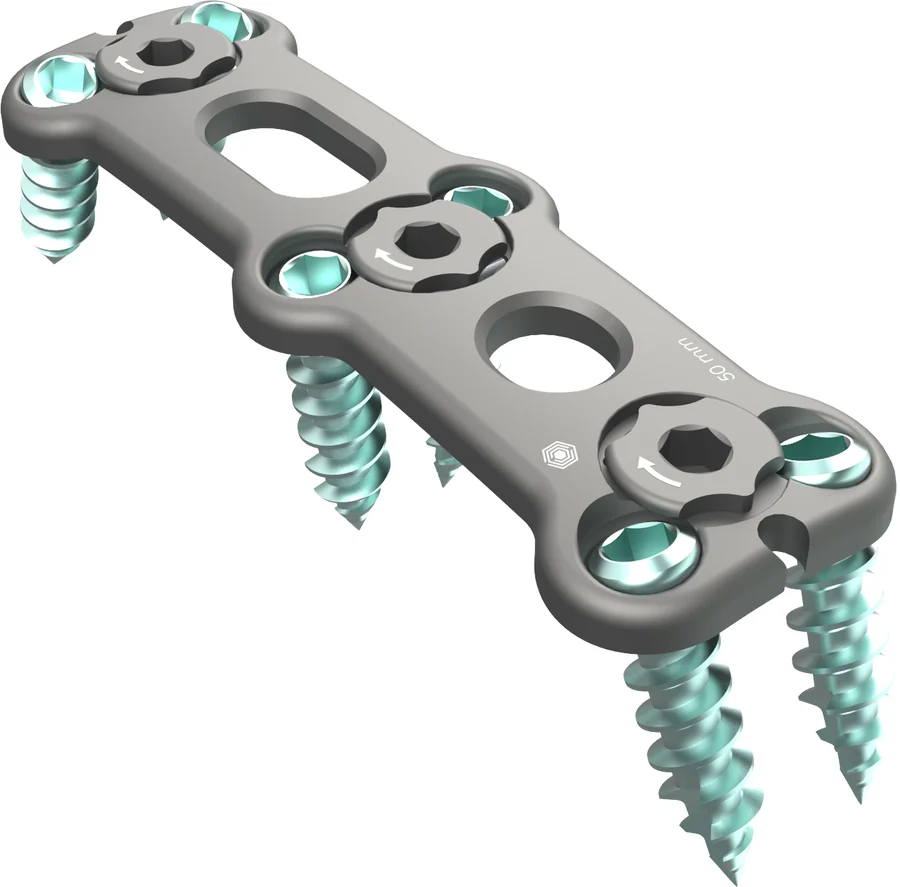
The plate is forged from a titanium billet, a process chosen for fatigue resistance and structural density. The aim is high strength at low thickness. The outer rim is rounded, which is intended to make the plate less aggressive against the soft tissue lying over it.
Two pre-set curves
Each plate carries an anatomical radius across the vertebral body and a lordotic radius along the spine. It is designed to sit flush without intraoperative bending. When more or less lordosis is wanted, a plate bender is used. Its channels protect the lock region, because bending at the lock would impair its action.
Quarter-turn central lock
A central lock covers the two screws of each level. It turns through 90° with the plate screw driver and gives visual and tactile confirmation that it is closed. The mechanism is mechanical, with no ring that can fatigue under high insertion torque, and screws can be unlocked, removed and repositioned in revision. When the lock is closed, the screw heads lie flush or recessed beneath it.
Variable screw angulation
Screws can be angled from −2° to 22° in the cephalad–caudal plane and from −4° to 10° in the medial–lateral plane. A double sleeve prepares both holes at one end of the plate together. An angled sleeve awl reaches the cephalad trajectories without being blocked by the chin or mandible.
Open view of the field
Fixation pin holes are positioned to keep the surgical field unobstructed and give a clear line of sight during screw insertion. The plate can be aligned to the endplates under direct sight while it is held with fixation pins. A midline alignment notch helps centring.
Depth-controlled drilling
The drill has an integrated depth stop that limits drilling depth by contacting the sleeve. The depth is therefore set before drilling instead of being judged during it.

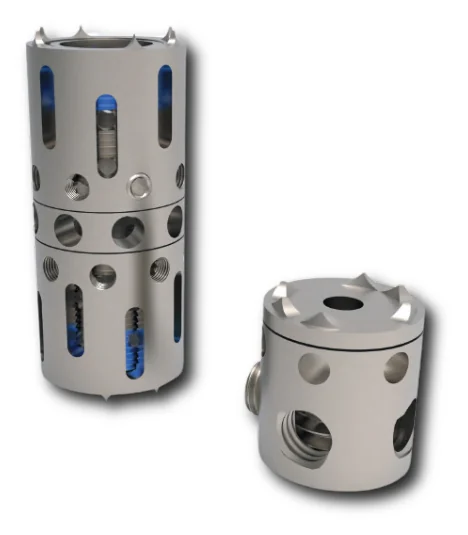 VERTELIFT-CAnterior cervical corpectomy cage
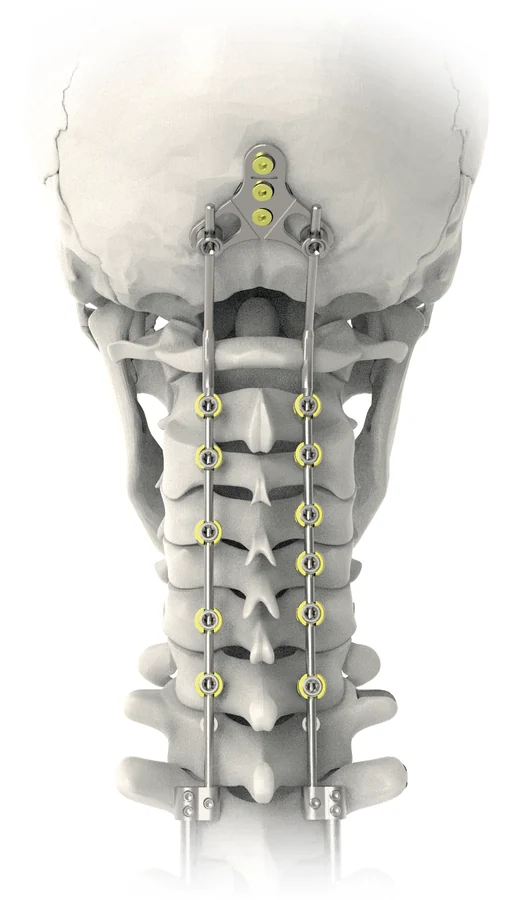 OXIS PLUSOccipitocervical fixation system
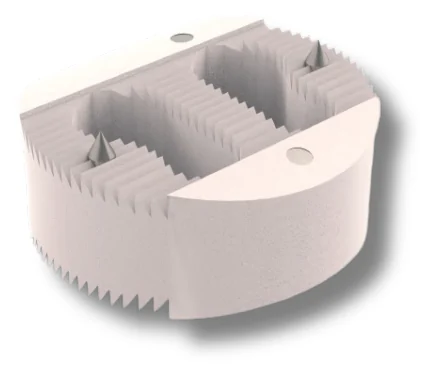 POLARCervical PEEK cage
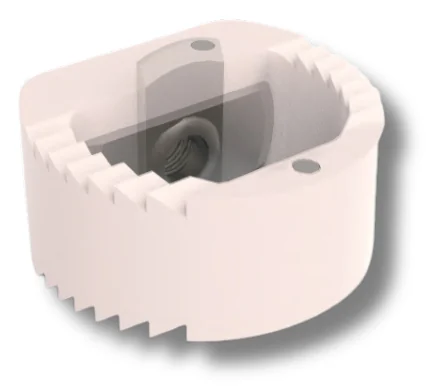 POLAR-BCervical bladed PEEK cage
 CARSTENTrabecular stand-alone cervical cage
 D-FLEXTitanium cervical disc prosthesis