Titanium and silicone
Two titanium endplates enclose a compressible silicone core. The core is intended to absorb load between the vertebrae, while the titanium faces make the contact with bone. This material split is the main difference from D-MOTION, which is made entirely of PEEK.
Motion at the operated level
The design is intended to keep flexion, extension, lateral bending and axial rotation. Maximum angles are 7° for flexion and extension, 7° for lateral bending and 10° for rotation. These are design limits of the implant and not a forecast of any patient's range of motion.
One pre-assembled component
The prosthesis arrives assembled, so there is no intraoperative assembly step. It is held in the dedicated disc prosthesis holder and seated with light hammer taps.
Contoured endplates with blades
The endplates follow the anatomy of the vertebral surface to give broad contact, and titanium blades are intended to resist migration.


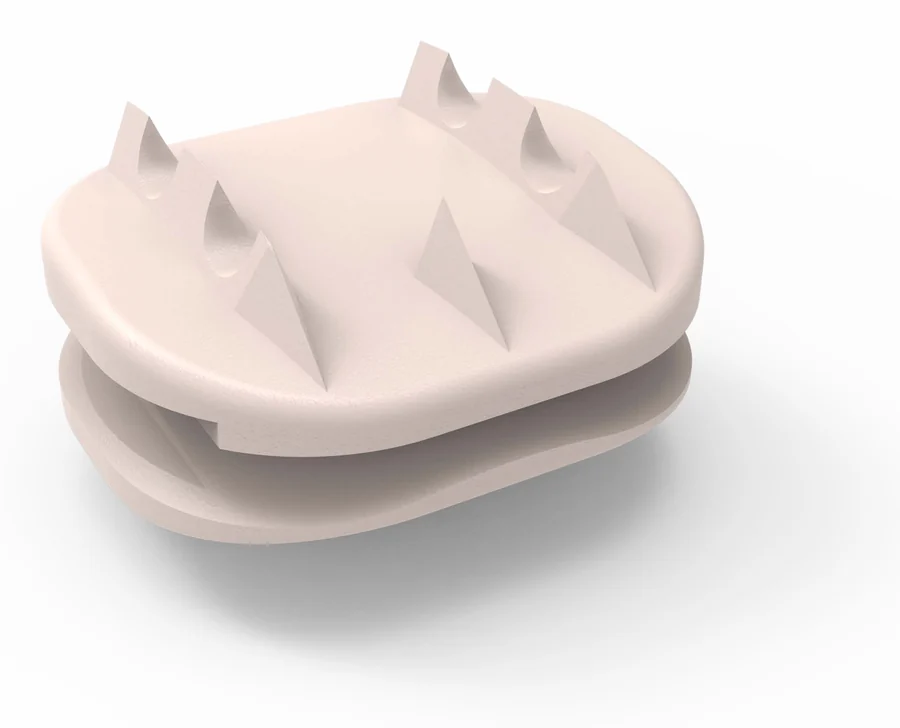 D-MOTIONPEEK cervical disc prosthesis
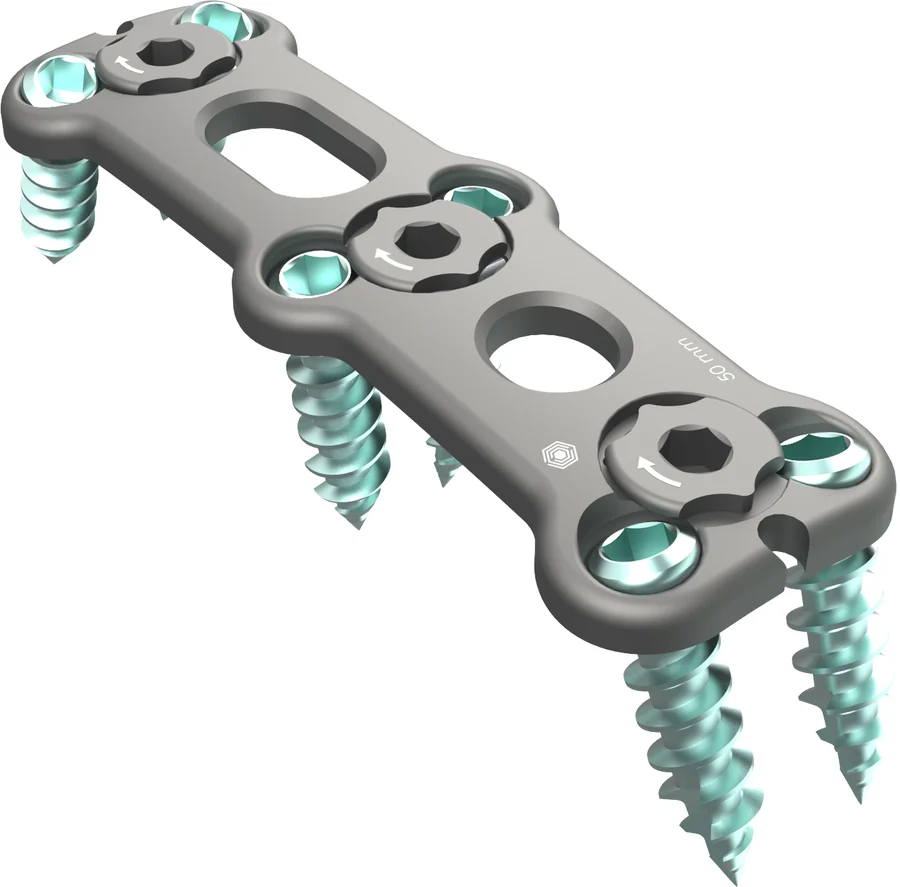 TRIMIAnterior cervical plate system
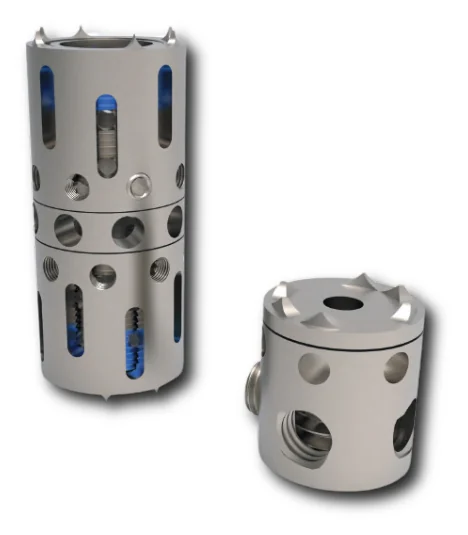 VERTELIFT-CAnterior cervical corpectomy cage
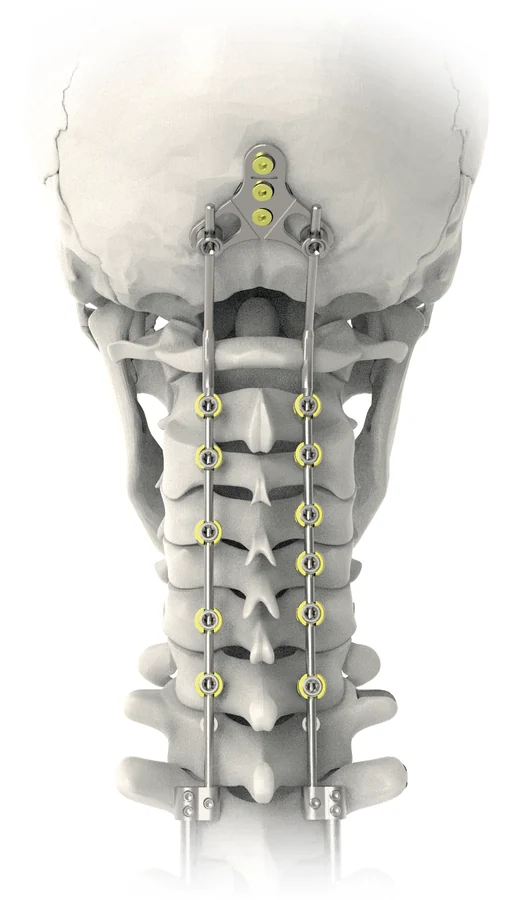 OXIS PLUSOccipitocervical fixation system
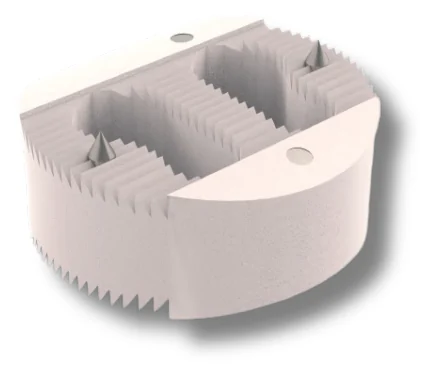 POLARCervical PEEK cage