Distraction in situ
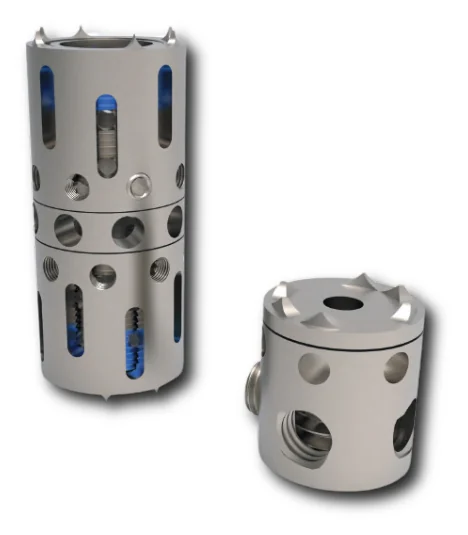
The cage enters the corpectomy defect closed, and the centre piece is then turned with the opener until the end pieces meet the adjacent vertebrae. Final height is therefore set against the real gap rather than a trial. A blue marking appears when the maximum distraction height has been reached.
Single-step locking
Once the position has been checked, the end pieces are locked to the centre piece with the lock screw fixer. Height is fixed in one step at the length the surgeon chose.
Graft space and endplate contact
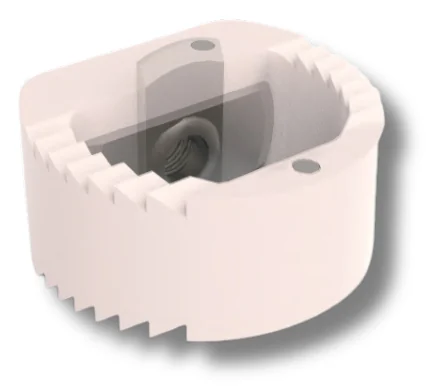
A widened graft space allows the cage to be grafted before it is distracted in the defect. Angled upper and lower surfaces are designed to give full contact with the vertebral surface, which spreads load over the endplate. The contact faces carry teeth and a threaded surface.
Measured in situ
A length guide measures the defect from the posterior aspect of the endplates. The cage is chosen so that its closed length is shorter and its opened length longer than the defect, so it goes in without force and is then opened to bear on both endplates.

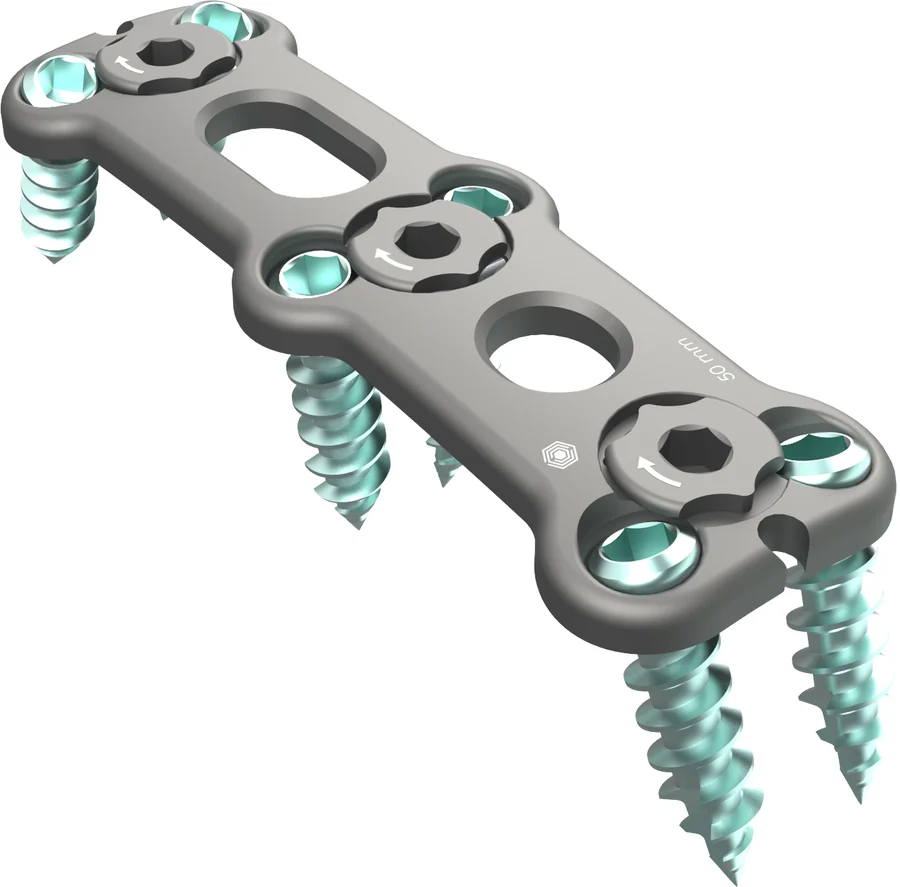 TRIMIAnterior cervical plate system
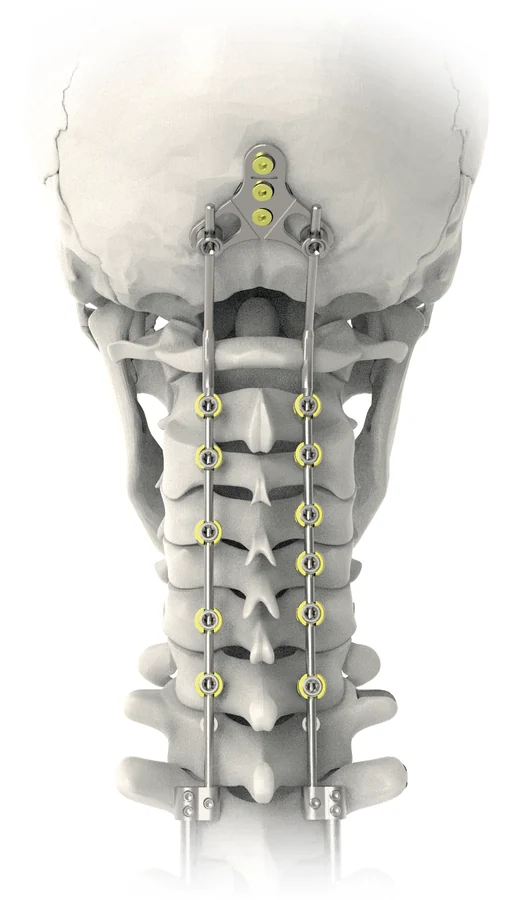 OXIS PLUSOccipitocervical fixation system
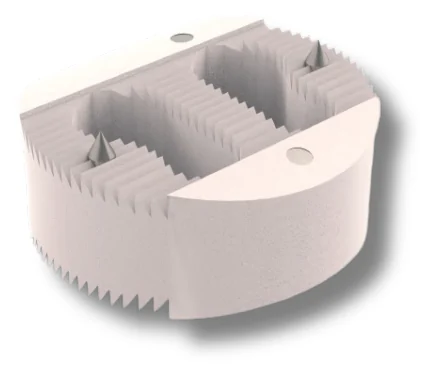 POLARCervical PEEK cage
 POLAR-BCervical bladed PEEK cage
 CARSTENTrabecular stand-alone cervical cage
 D-FLEXTitanium cervical disc prosthesis