Integrated locking blade
A locking blade is part of the cage and deploys directly into the vertebral endplates. It is intended to resist migration of the implant. Because it travels within the cage footprint, it needs no separate plate.

Cervical cage with integrated blade fixation.
EU MDR
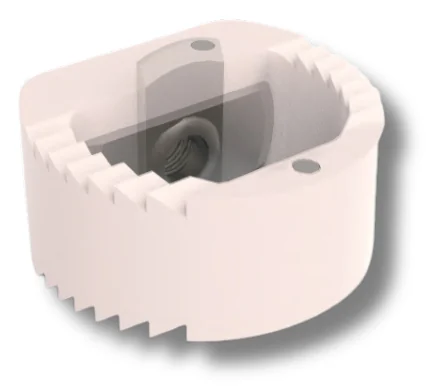
A cervical cage has to be held in the disc space once the retractor is removed. POLAR-B is a PEEK cervical interbody cage with a built-in locking blade; the radiolucent PEEK body is MRI-compatible. After the cage is seated, the blade is deployed into the adjacent endplates by turning the rear of the holder, so no separate plate is required.
A locking blade is part of the cage and deploys directly into the vertebral endplates. It is intended to resist migration of the implant. Because it travels within the cage footprint, it needs no separate plate.
The cage is attached to the POLAR-B holder by turning the rear part of the holder clockwise, and it is inserted with light hammer taps. With the cage in its final position, turning the back of the holder deploys the blade from within the cage. Turning it the other way retracts the blade before removal.
A wide central window holds osteobiologic material in contact with both endplates. Tantalum markers give a fluoroscopic view of the cage position, and the PEEK body is radiolucent.
Several footprints and heights are offered, so the cage can be matched to the disc space. A separate holder is supplied for the smallest implants.
Source: Normmed product catalogue.
The product information on this page is intended for healthcare professionals. Please confirm that you are a healthcare professional to continue. If you are a patient, our information for patients explains how implants are chosen and where to find your implant card and instructions for use.
We use necessary local storage. With your permission, Google Analytics helps us understand website use. We do not use advertising cookies.
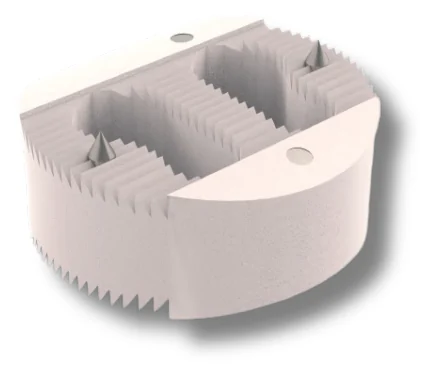 POLARCervical PEEK cage
 CARSTENTrabecular stand-alone cervical cage
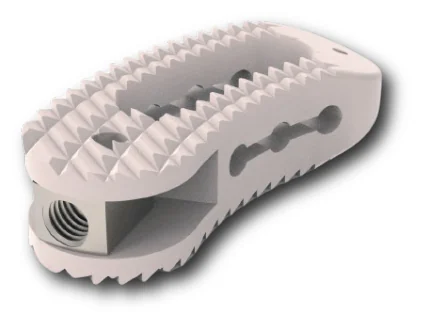 TWISTYTLIF PEEK cage
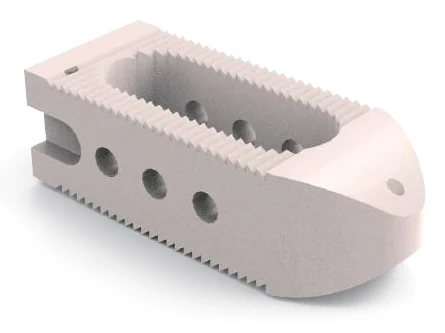 ALLIGATORPLIF PEEK cage
 TRIMIAnterior cervical plate system
 VERTELIFT-CAnterior cervical corpectomy cage
 OXIS PLUSOccipitocervical fixation system
 D-FLEXTitanium cervical disc prosthesis