Trabecular lattice
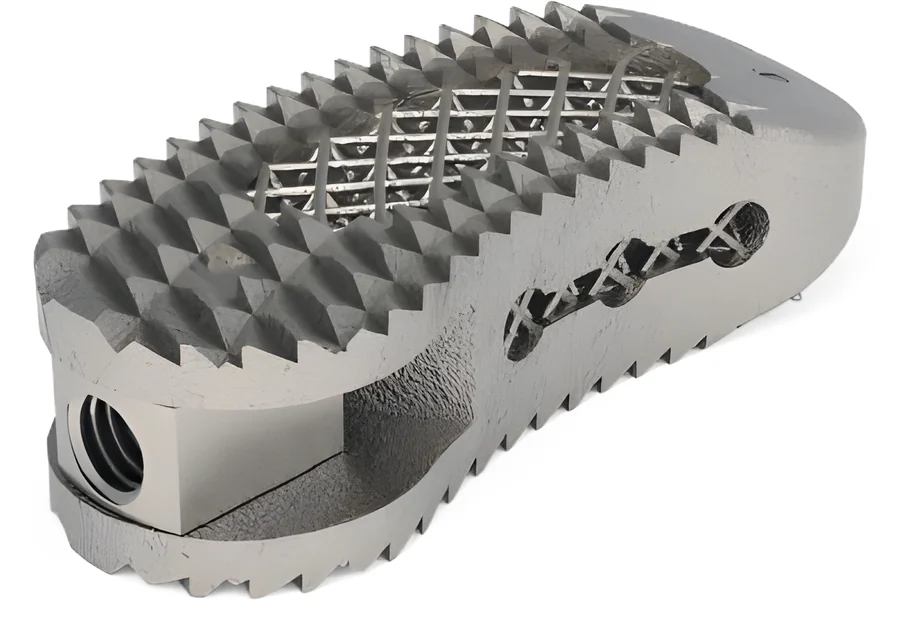
The cage is 3D printed by selective laser melting in titanium alloy (Ti-6Al-4V ELI). The interconnected open pores are designed to approximate the architecture of cancellous bone. The porous structure covers the top and bottom faces and surrounds the whole graft window.
Open matrix for graft
The open matrix gives the cage an internal volume for graft. It is intended for endoscopic and minimally invasive fusion, where the amount of autograft that can be harvested is limited.
Wedge nose and serrations
A smooth wedge nose reduces insertion resistance and is intended to allow atraumatic delivery into the prepared intervertebral space. Solid-tipped serrations on the upper and lower surfaces are angled for bidirectional fixation and to increase the surface area in contact with the endplate.
Rotating TLIF design
The TLIF cage has a mobile titanium head. It is designed to rotate on its rail as the front edge meets the ventral annulus, which allows medialisation in the anterior disc space.
Imaging and load sharing
The open lattice is intended to allow X-ray and CT assessment of the fusion area with limited metal artefact. The titanium structure is designed to share load with the adjacent bone.

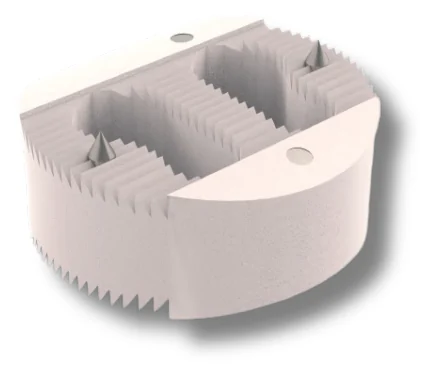 POLARCervical PEEK cage
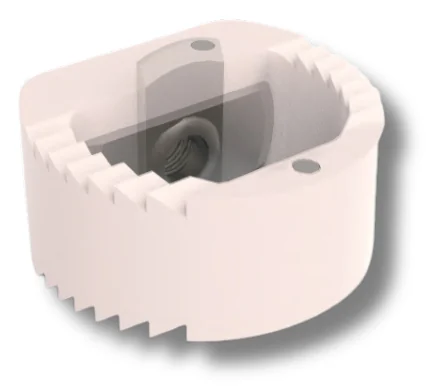 POLAR-BCervical bladed PEEK cage
 CARSTENTrabecular stand-alone cervical cage
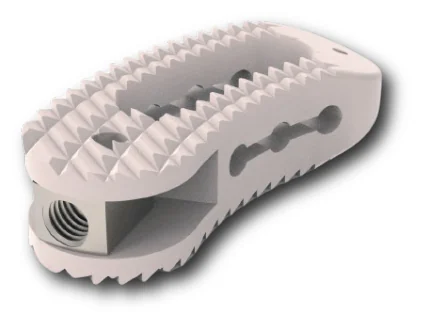 TWISTYTLIF PEEK cage
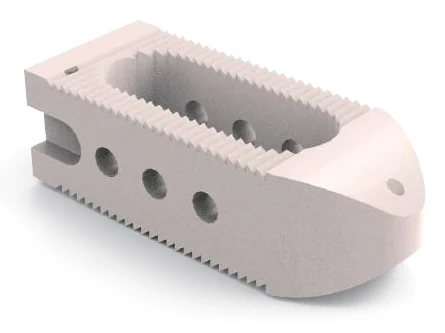 ALLIGATORPLIF PEEK cage
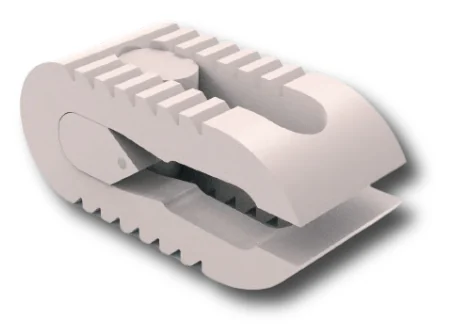 ALLIGATOR EXPExpandable PLIF PEEK cage
 ESAALIF PEEK cage
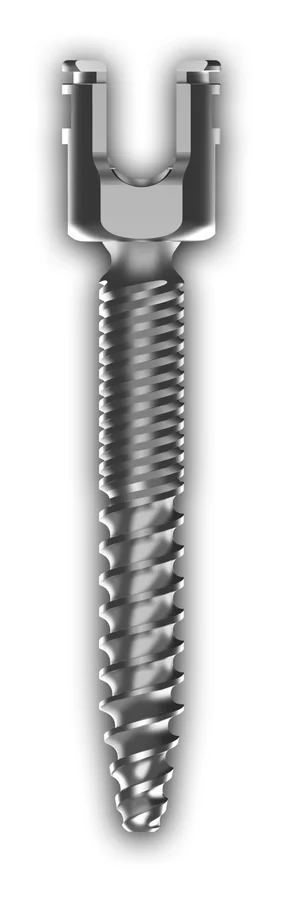 SILVERPosterior thoracolumbar fixation system