Divergent screws
Integrated screws leave the cage on diverging paths into the vertebral bodies above and below. The divergent arrangement is intended to resist lateral bending, extension and axial rotation.

Anterior lumbar interbody fusion with screw fixation.
EU MDR

An anterior lumbar cage can use the full width of the endplate. It must be fixed to the vertebral bodies, and the screw path has to be reached through the incision. ESA is a PEEK ALIF cage with integrated bone screws and a screw lock, combining PEEK and titanium in a single implant.
Integrated screws leave the cage on diverging paths into the vertebral bodies above and below. The divergent arrangement is intended to resist lateral bending, extension and axial rotation.
The screw holes are angled so that the surgeon can place the screws while bypassing lateral soft tissue.
The bone screws are self-centring, self-drilling and self-tapping. After the initial pilot hole, a screw is placed to stabilise the implant before any further holes are prepared.
A flexible awl, drill and screw driver are used through a block guide that is fixed to the cage. The flexible set is intended to accommodate steep angles and so to help with screw insertion on steep sacral slopes.
A locking mechanism holds the screws in the cage and is designed to help prevent pull-out. The implant combines a radiolucent PEEK body with titanium components, and serrations on both endplate surfaces help limit forward movement of the cage.
Source: Normmed product catalogue.
The product information on this page is intended for healthcare professionals. Please confirm that you are a healthcare professional to continue. If you are a patient, our information for patients explains how implants are chosen and where to find your implant card and instructions for use.
We use necessary local storage. With your permission, Google Analytics helps us understand website use. We do not use advertising cookies.
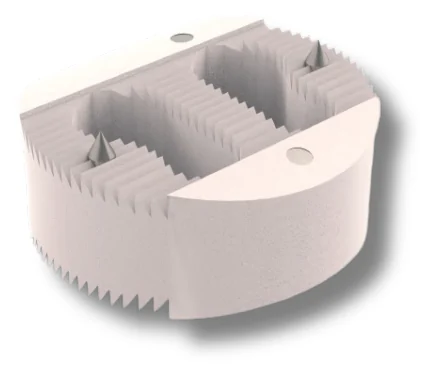 POLARCervical PEEK cage
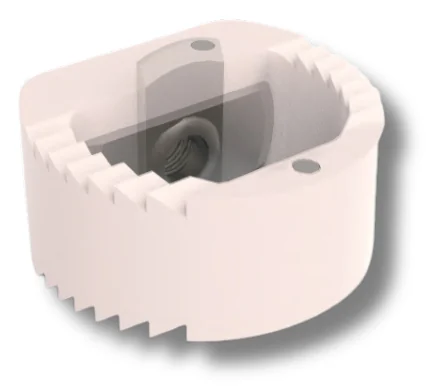 POLAR-BCervical bladed PEEK cage
 CARSTENTrabecular stand-alone cervical cage
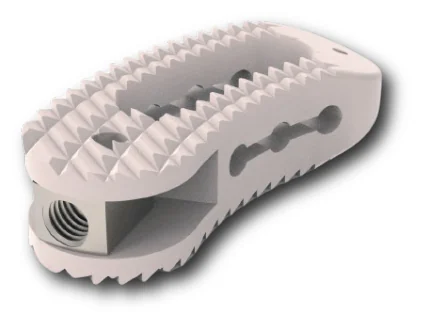 TWISTYTLIF PEEK cage
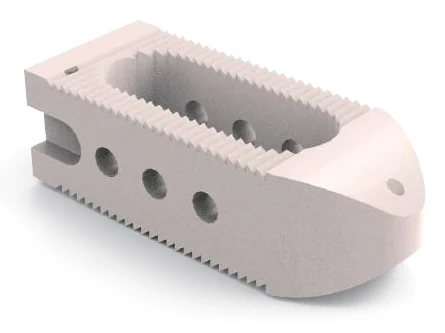 ALLIGATORPLIF PEEK cage
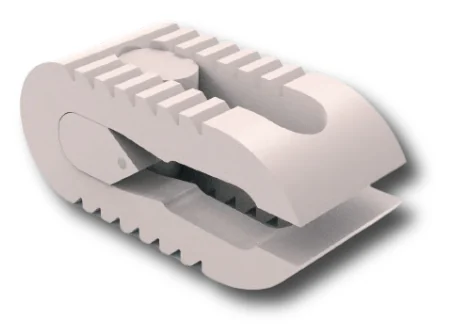 ALLIGATOR EXPExpandable PLIF PEEK cage
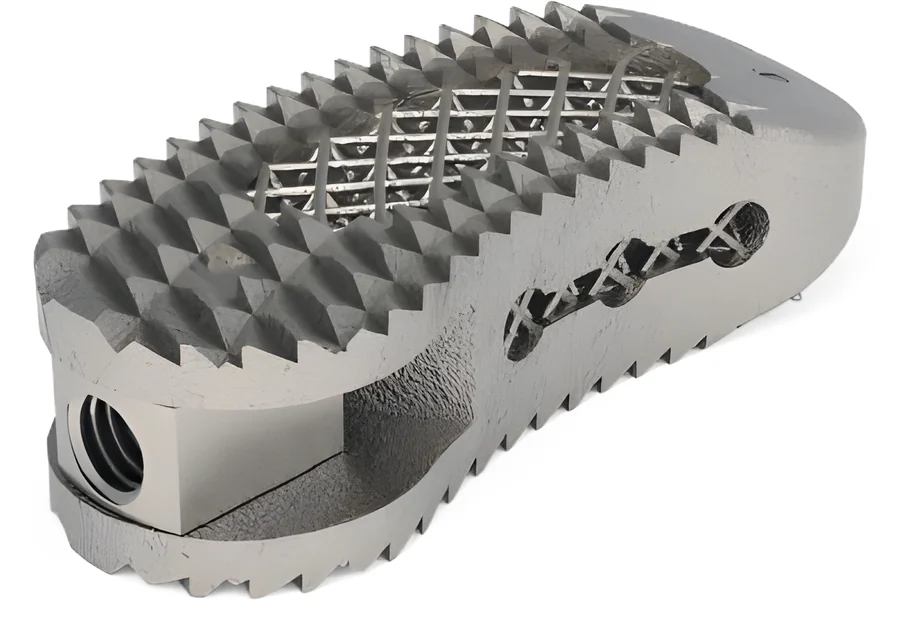 Tra-TiTrabecular titanium PLIF and TLIF cages
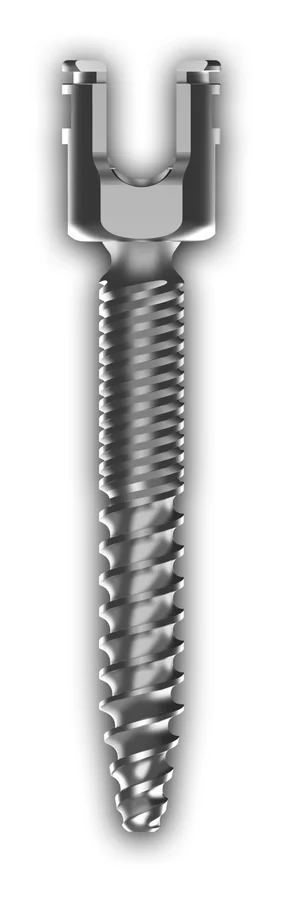 SILVERPosterior thoracolumbar fixation system