Combination holes
The straight plates have uniform hole spacing and threaded holes for the locking-screw option. They also offer compression, neutral and buttress screw positions. The surgeon can pull the bone to the plate with cortical screws and then lock the construct. The plate can also neutralise a lag-screw fixation.
Bullet-shaped ends
The ends of the 3.5 straight plates are bullet shaped for submuscular insertion, so that a long plate can be slid beneath the muscle.
Angled plates and attachment plate
The 135° and 95° angled locking plates work with a lag screw and a compression screw. The locking attachment plate is used with the narrow, broad, proximal femoral, distal femoral and 95° plates, together with a special additional locking screw and fixation end cap. It has an adjustable-position hole and is intended for use where a stem or nail limits bicortical screw placement.

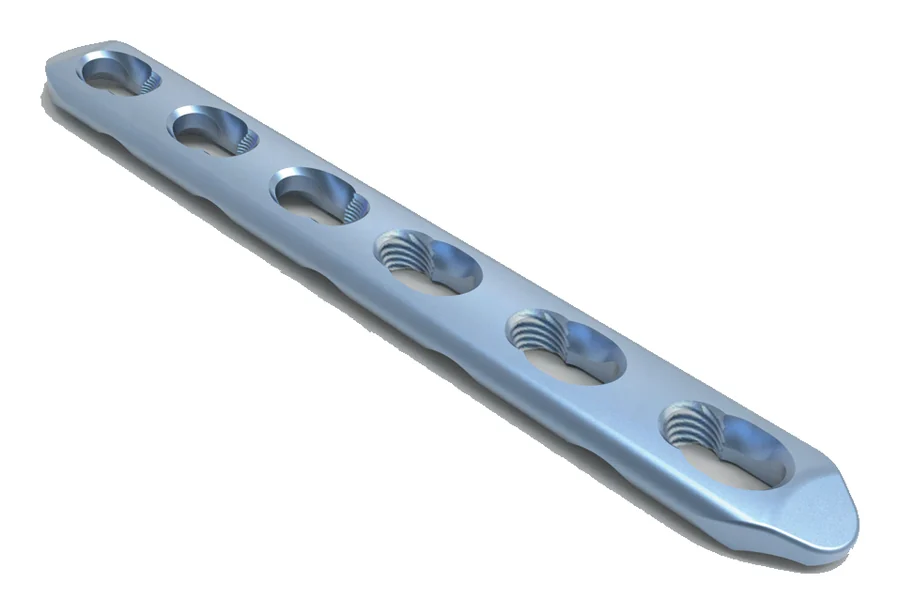
 PIONEERUpper extremity plates
 PIONEERLower extremity plates
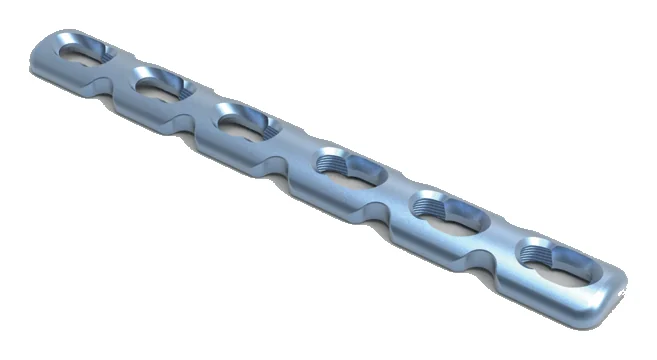 PIONEERPelvic and reconstruction plates
 HECTORStandard cementless stem (135°)
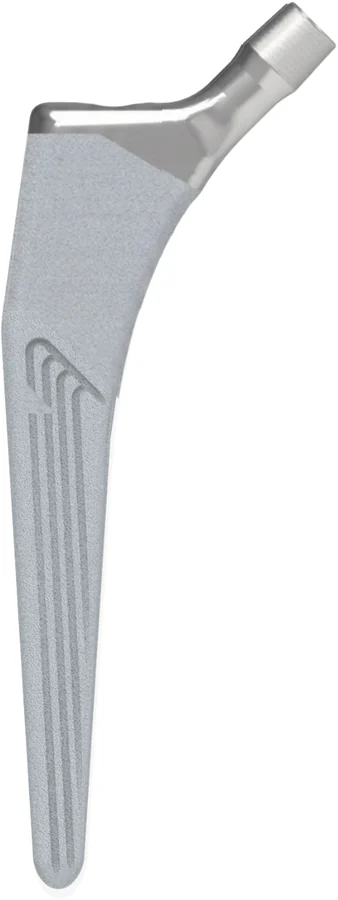 HECTORStandard cemented stem (135°)
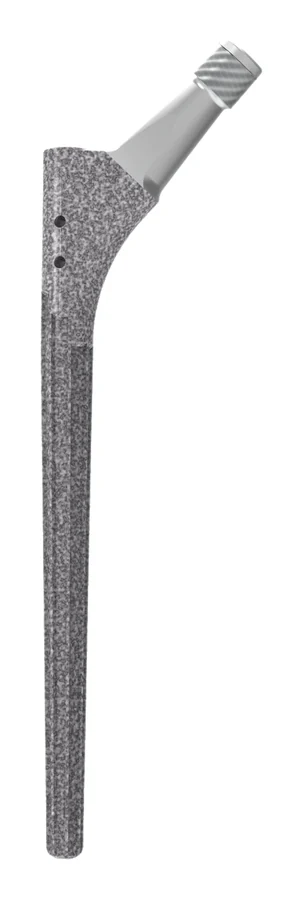 MAYARevision cementless stem (135°)
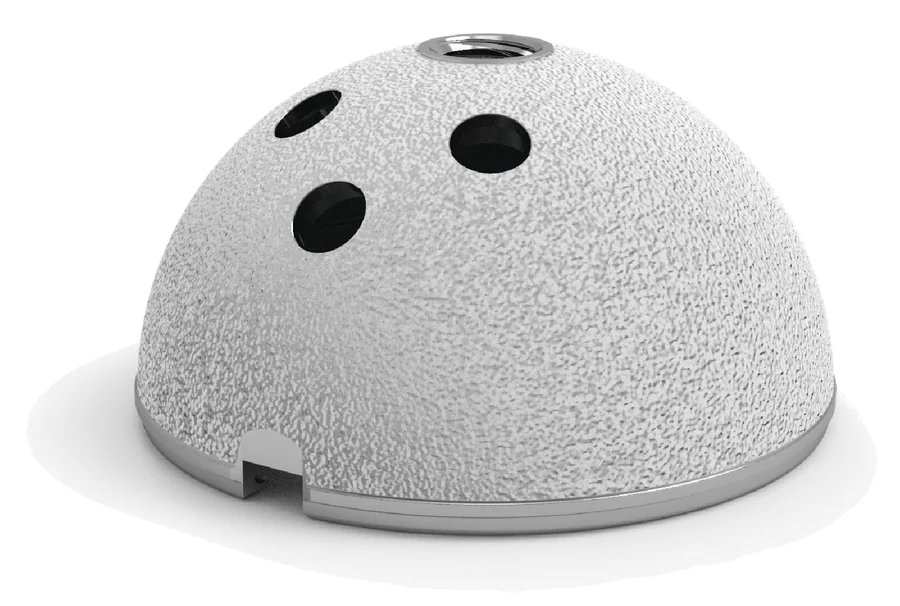 HECTORAcetabular system