Three proximal locking options
The proximal end offers oblique and transverse locking options. With cancellous locking screws, they are intended to give the proximal fragment more purchase in metaphyseal bone. A 45° outrigger directs the drill for the oblique holes and a straight outrigger for the transverse holes.
Anatomic bend and cannulation
The anatomic bend eases nail insertion. The nail is cannulated, so it is guided over the wire.
Distal oblique locking
Distal locking can be static or dynamic. Distal screws are placed through the guide bar and distal outrigger, and a locking block sets dynamic locking.
End caps that lock
End caps are intended to keep bone from growing into the nail. They extend the nail height if the nail is over-inserted. An end cap tightened onto the proximal oblique screw holds that screw in the nail and gives the proximal fragment a fixed-angle hold.

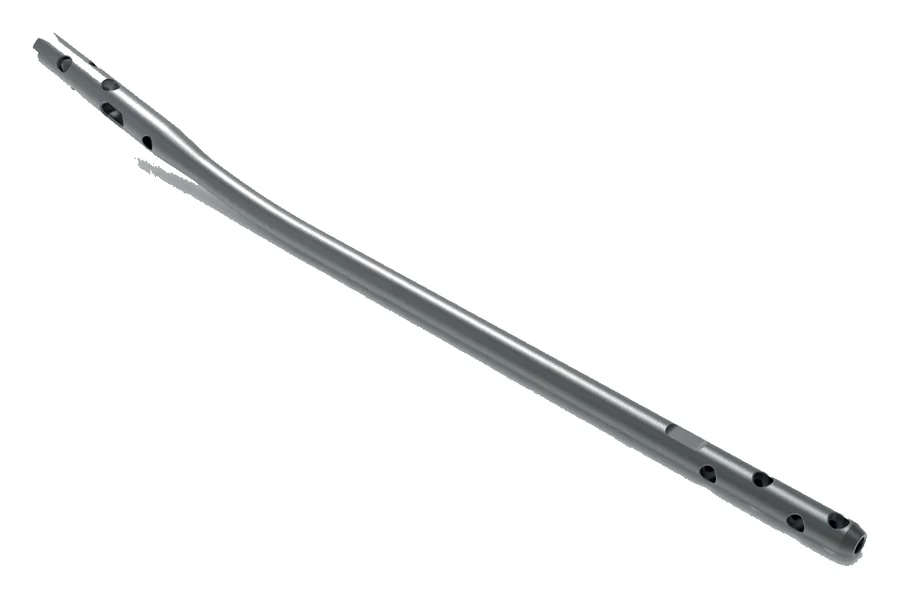
 FTNAFemoral trochanteric nail
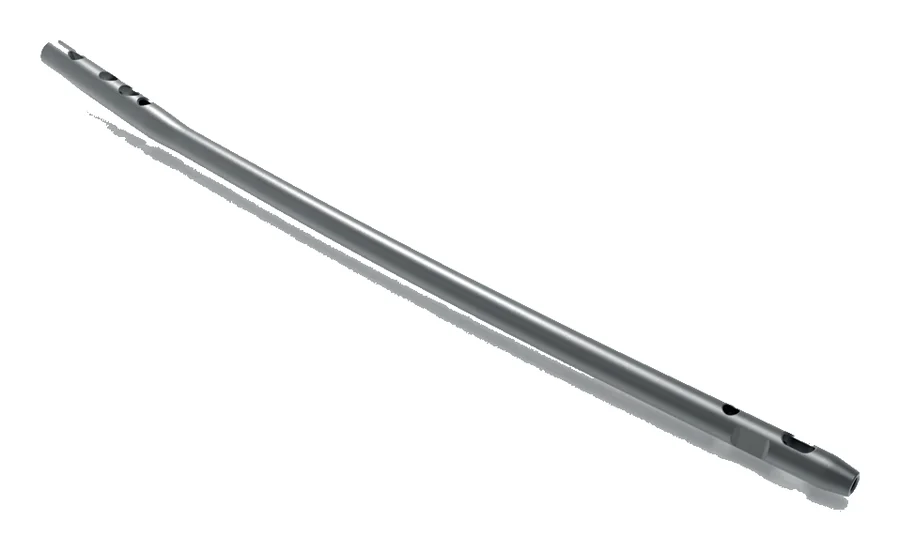 TraumaLateral intramedullary femoral nail
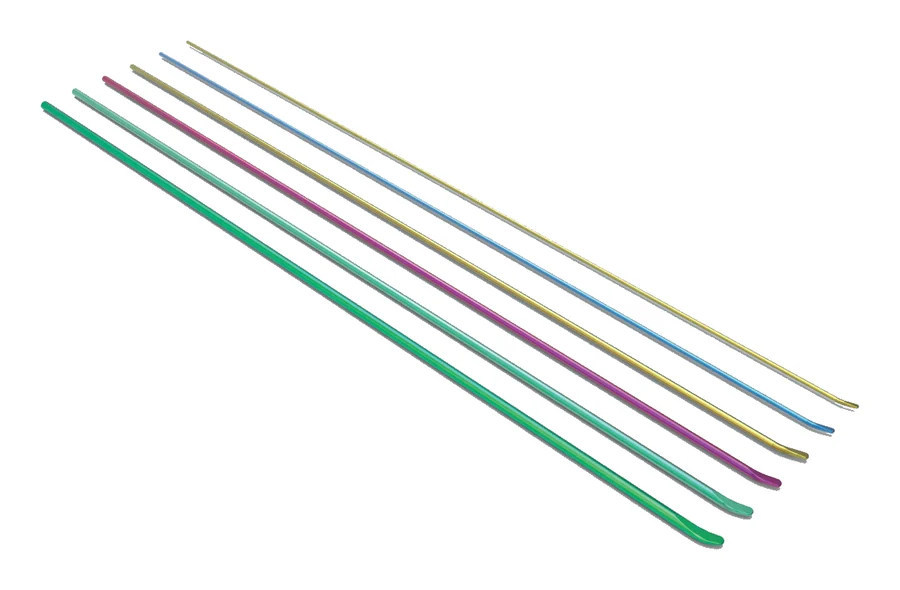 TENFlexible nail
 PIONEERLower extremity plates